
Stingray, Stingray
Stand by for Action

Welcome to Animated, a weekly publication exploring animation, craft, and the ideas behind how things are brought to life. If that sounds like your kind of thing, feel free to subscribe or follow.
If you were anywhere near a television in the 60s (or a repeat in the decades that followed), you’ll probably remember one thing before anything else: the voice that boomed.
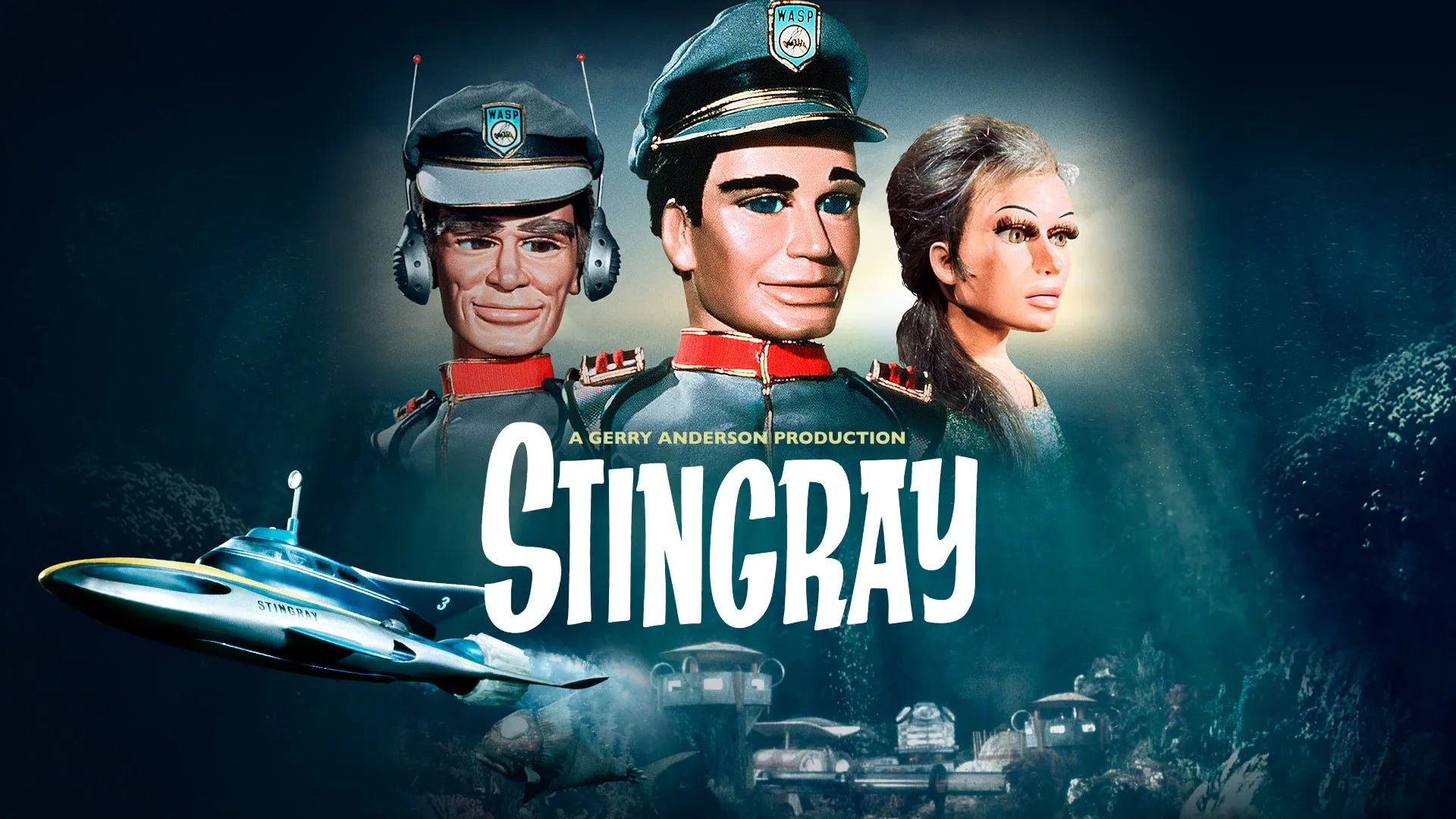
Anything can happen in the next half hour!
This week, I’m diving beneath the surface and looking at one of the most ambitious children’s series of its time. Not that it feels like this now, at the time, the show that blended puppetry, sci‑fi and sheer imagination in a way that if you think back to what was available in animation, it was at the vanguard of its genre.
A Side Order of History
Stingray was a British children’s science fiction series created by Gerry and Sylvia Anderson. Stingray was first broadcast in October 1964 on ITV and was set in the 2060s. The show followed the World Aquanaut Security Patrol, AKA WASP, whose job was to patrol Earth’s oceans and seas, addressing any mysteries that arose beneath the waves.
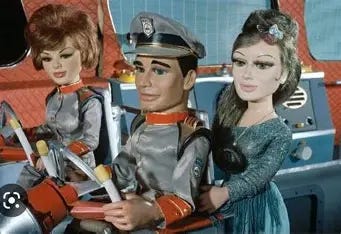
Their pride and joy was a nuclear‑powered submarine called Stingray, which the chisel-jawed Troy Tempest captained, backed up by his co‑pilot Phones and the mysterious Marina.
Running for 39 half‑hour episodes between 1964 and 1965, the show packed quite a punch in a small run, although it lived on through repeats and home releases for years, even decades afterwards.
Here is where things get interesting
Stingray was made using Supermarionation. This is a technique that combines marionette puppets with electronic lip‑sync alongside highly detailed model work. In addition, it was the first British series to be filmed entirely in colour. This is an interesting move, as at the time most people would only have access to black-and-white television, so it would be years before they saw it in colour, as it was originally filmed. This, to me, was a giant leap too, as it wasn’t usually children’s television that had the money spent on it in production.
Characters
Much like many children’s shows, the characters have to stick with their audience, and Stingray makes this happen wonderfully. These all revolve around the brilliant idea of underwater civilisations and a high‑tech military base.
Troy Tempest
The all-round hero has to be Troy. The captain of Stingray is brave, confident and incredibly composed. He does, of course, follow the classic 60s action lead with swarve, flare and the genius quality.
‘Phones’ Sheridan
Navigator, radio operator and generally the voice of reason. Phones are the steady hand when things go wrong (which, let’s be honest, is most episodes).
Marina
Probably the most intriguing character of the lot, without a doubt, was Marina. A mute young woman from an underwater civilisation, Marina communicates through gestures and expression rather than words, which was quite an interesting move for the series.
Commander Shore
The no‑nonsense leader of WASP, usually heard shouting his orders from Marineville. If something needs doing, he’s already ahead of the game to make things happen.
Titan
Every good show needs a villain. Titan rules an underwater kingdom and spends the majority of his time trying to take over the world, no surprises there then.
Why It Worked
There’s something quite brilliant about Stingray when you look back at it now.
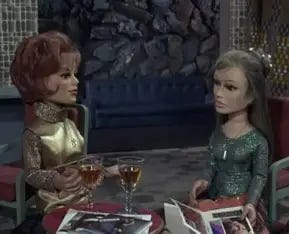
It mixes a child‑friendly sense of adventure with genuinely creative world‑building. You flash between watching a submarine battle, exploring an underwater civilisation, and dealing with some strange phenomenon from the deep.
Amazingly, I think that despite being made with puppets, it never really felt limited by the puppet design, which was evolving here too, and Stingray introduced more expressive faces and even realistic glass eyes to give characters more life and emotion. It’s easy to see how this led directly into Thunderbirds, which took everything here and dialled it up.
Fun Facts
Stingray ran for just 39 episodes.
The underwater scenes weren’t filmed in water at all. They were shot dry, using clever visual tricks and tanks to simulate the effect of water.
The puppets became more advanced here, with interchangeable heads and parts to convey a wider range of emotions.
Many of the characters were inspired by real‑life actors, adding to their distinct look and feel…shhh, don’t tell anyone.
Although it might not always get the same recognition as Thunderbirds, Stingray is one of those shows that quietly pushed boundaries. It was one of those shows that, without it, there wouldn’t be Thunderbirds or Captain Scarlet.
Thanks for reading. If you fancy commenting, I love reading all your comments.
Jon, Animated.
This just reminds me of boring Sunday afternoons in the 1980s, only broken up by one nod to children's tv!
The Andersons had quite a little TV empire going on...