
The World of Woody Woodpecker
The Ultimate Trouble Maker

Welcome to Animated, where I explore animation, craft, and the ideas behind bringing everything to life. If that sounds like your kind of thing, feel free to subscribe or follow.
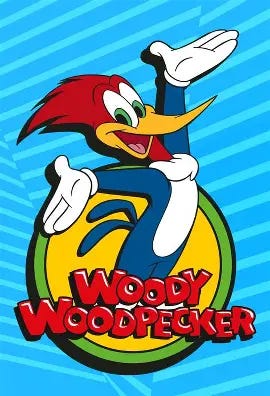
Woody Woodpecker is one of a certain type of cartoon character who feels like they have always been with us. He was created by Walter Lantz and Ben ‘Bugs’ Hardaway and first appeared in the animated short Knock Knock in 1940. Like many other characters of that era, he was initially a supporting character before quickly becoming the star of his own series.
The cartoon was made by Walter Lantz Productions and distributed by Universal, with Woody arriving during what many consider (including me) the golden age of cinema animation. While characters such as Mickey Mouse and Bugs Bunny were becoming household names, Woody carved out his own place with a very different personality, as he was loud, mischievous, and unpredictable. Most of the time, he seemed to enjoy causing chaos simply because he could.
What made Woody stand out was that distinctive laugh. Even people who have never watched a full Woody Woodpecker cartoon will usually recognise it. His early appearances presented him as a wild and almost unhinged character, and this image reflected the cartoons’ comedy throughout the 1940s. Over time, though both his appearance and personality became more refined and a little softer, he thankfully never completely lost the troublemaker spirit that had made him famous.
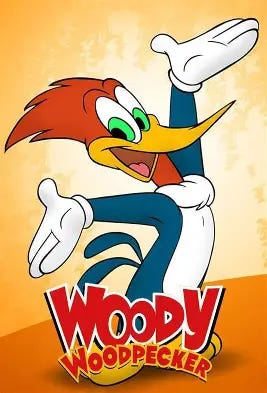
The cartoons are typically short, fast-paced adventures built around simple conflicts in which Woody might battle a neighbour, frustrate a hunter, or outwit a rival. His trademark here was his ability to turn an ordinary situation into chaos. All the stories relied on visual comedy with escalating jokes, making them easy for the audience to enjoy regardless of when they were made.
Like many classic animation characters of that time, Woody has expanded well beyond the cinema. As merchandise started, he began to appear in comics, on television, in merchandise, and at theme parks. Later revivals helped keep him alive long after the original cinema shorts ended.
Characters
Although Woody is very much the focus of the series, several recurring characters help build out his world and give him plenty of opportunities to bring his own brand of mayhem.
Woody Woodpecker
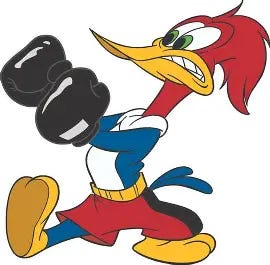
Woody is energetic, mischievous, clever, and totally exhausting. He is never the strongest character in any situation he is placed in, but he is often the most determined. Whether he is pulling pranks or fighting back against someone who has annoyed him, Woody usually finds a way to come out on top. His confidence is perhaps only matched by the volume of that laugh.
Winnie Woodpecker
Winnie became Woody’s long time girlfriend. She shares much of Woody’s energy but generally comes across as more grounded than he does, who wouldn’t? Their relationship gave later cartoons and television appearances a little more warmth alongside the comedy, as Woody would be difficult to take on his own.
Buzz Buzzard
Like every cartoon hero, they need an antagonist, and Buzz played that brilliantly. Clever, sneaky, and constantly looking for any shortcuts, Buzz frequently found himself battling Woody in contests of wit and coming off worse for it.
Wally Walrus
Another rival was Wally. He is short-tempered and perpetually frustrated as his attempts to maintain order are usually destroyed by Woody’s behaviour, making him a great comic foil. If Woody represents chaos, Wally represents the one caught up in it all.
Plotline
Like many cinema shorts of that era, Woody Woodpecker did not rely on a single overarching narrative, as was popular at the time; each cartoon functioned as its own self-contained story.
This formula sounds very simple on paper. Woody wants something, somebody gets in his way, and chaos follows. For me, in these, the magic happens with how creatively the animators and writers explore and develop that formula.
The best Woody cartoons have a relentless pace, with jokes that build on one another and situations that become increasingly ridiculous. This then pushes the characters to the breaking point, and there is a wonderful sense that absolutely anything might happen next.
For me, what also makes the series interesting from an animation perspective is how it evolved over the decades. When you watch the early Woody cartoons, they are rougher, louder, and more anarchic. As the character matured, and tastes along with it, the storytelling became more polished, but the core appeal remained the same. Woody was always the disruptor, arriving to upset the status quo and keep audiences laughing.
Three Fun Facts
1. Woody debuted in somebody else’s cartoon
Woody did not come to the screen as the star of his own show. His first appearance was in the 1940 Andy Panda short Knock Knock, where he quickly stole the spotlight from the cartoon’s star, Andy Panda.
2. Mel Blanc provided Woody’s original voice
Before becoming famous as the voice of Bugs Bunny, Daffy Duck, and countless others, Mel Blanc voiced the original Woody Woodpecker. He helped to create that famous laugh. What a man!
3. Woody has a star on the Hollywood Hall of Fame
Not every animated character can claim to have their own star on the Hollywood Hall of Fame, but Woody does, and this is a real testament to his longevity in animation, I think.
Woody’s Legacy
Only a few cartoon characters have survived as many iterations in the entertainment industry as Woody Woodpecker has. Starting in cinema shorts, then came television syndication, comic books, theme parks, and now even streaming platforms, where he has continued to find new audiences.
Part of that longevity comes from the character’s simplicity. Woody is easy to understand and has a rebellious streak with a determination to have fun, even if everyone around him would prefer a quiet life.
These days, he may not receive as much attention as his contemporaries might, but I would say that his influence on animated comedy can’t be ignored. The fast pacing, exaggerated reactions, and energy that define Woody’s adventures can still be seen in modern animation.
More recently, Woody has been introduced to a new generation through live-action/CGI films, including Woody Woodpecker (2017) and Netflix’s Woody Woodpecker Goes to Camp (2024)
For many people, Woody Woodpecker represents a particular era of cartoon filmmaking when animators pushed characters, expressions, and comedy to their absolute limits. More than eighty years after his debut, I can still hear that laugh echoing in my ears.
Thanks for reading.
If you enjoyed this nostalgic look back at Woody Woodpecker, consider subscribing to Animated. Every week, I revisit classic cartoons, children’s television, and animation history from Britain and beyond.
I can hear his laugh now, too!!
He personifies so much about animation, good and bad- the earth-shattering chaos created by so many characters vs. the increasing reliance on formulaic construction to meet production goals in a franchise's later years. But being an ebullient type A personality means that he can sometimes be too much for some people (e.g. his enemies), and he can sometimes bite off more than he can chew. And he was always at the mercy of the directors of his cartoons- some of whom were brilliant, but others who were just spot fillers.
But he was an exception to his rule, with his films still drawing attention in the TV era- and that was all due to his unique mixed trickster-boob personality- and that signature laugh...