
The Little Princess
From page turner to classic animation

Welcome to Animated, a weekly publication exploring animation, craft, and the ideas behind how things are brought to life. If that sounds like your kind of thing, feel free to subscribe or follow.
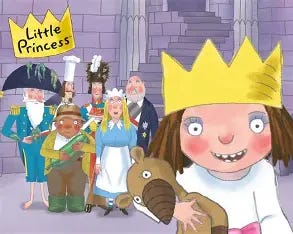
Little Princess was created by Tony Ross, based on his hugely popular book series, and first aired in 2006. The show centres on a young royal living in a castle where everyday childhood situations are explored through humour, curiosity, and a fair amount of stubbornness.
Produced by The Illuminated Film Company, the cartoon has a distinctive hand-drawn style that reflects the original book illustrations, giving it an instantly recognisable look.
Each episode is short and self-contained, typically focusing on a single problem or question that the Princess is trying to understand. This could be learning manners, dealing with friendships, or simply refusing to go to bed.
Unlike many cartoons of its era, Little Princess didn’t rely on merchandising the way action-based shows did and still do. It built a strong brand through books, DVDs, and character-based products aimed at younger children. Its strength lies in its relatability, particularly for preschool viewers, with themes now shared by the likes of Peppa Pig.
Characters
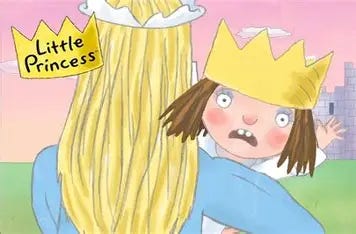
The series uses a small but memorable cast of recurring characters, each contributing to the Princess’s world in their own way. While the episodes are largely centred around her, the supporting cast helps guide, challenge, and occasionally indulge her behaviour.
Little Princess
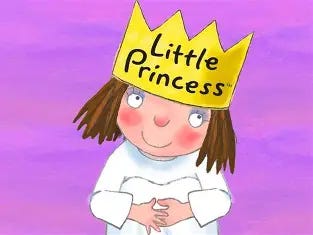
She is a curious, determined, and often stubborn little girl. She questions everything around her and challenges rules, particularly when they don’t make sense. While she can be demanding, she is also kind and imaginative, and most episodes end with her learning (sometimes reluctantly) an important lesson.
The King
He is a loving but slightly distracted father who adores the little princess. He struggles to balance his royal affairs with parenting, frequently conceding to the Princess to keep her happy. Despite this, he always wants the best for her and plays a key role in teaching her right from wrong.
The Queen
Always calm and composed, the Queen provides balance within the royal household. She takes a firmer approach when the Princess steps out of line, acting as a grounding influence, plus she wears a great headscarf.
The General
The always disciplined General represents order and routine. He is often seen training or organising activities, but has a softer side with the Princess, even if she disrupts his carefully planned schedules.
The Maid
She patiently helps clean up the Princess’s messes (and these are frequent). Her calm nature reflects the Princess’s energy so well in such a short animation, making her a reassuring presence.
Prime Minister
Deals with all the serious matters of running the kingdom, though his plans are regularly interrupted by the Princess. He represents responsibility and structure, but rarely gets things done without some form of chaos, usually from the little princess.
Gilbert
Although I wouldn’t usually mention a teddy bear, I think that Gilbert is really her closest companion. Although not a speaking character, he plays an important role in her imaginative world and is often involved in her adventures and emotional moments. Plus, I loved the drawings of him in the books when I read them to my children.
Plotline
What is great is that there isn’t an overarching plot, but rather a collection of everyday scenarios seen through the eyes of a young child. What makes the show stand out is its honesty and simplicity; the Princess doesn’t always behave perfectly, and the lessons aren’t forced. Instead, they unfold naturally, often through trial and error and a bit of royal chaos before things are resolved.
Legacy
Little Princess has created a strong place in children’s television, particularly here in the UK. Simple storytelling, a recognisable animation style, and relatable themes have helped it remain popular with new generations of viewers, and it has influenced many similar animations for younger children.
While it may not have the large-scale merchandising empire of some other animated shows, its success lies in its connection with its audience, not just through the animation but everything else around it. For many, it’s a familiar and comforting part of early childhood viewing, with episodes that parents often recognise from their own experiences.
The series continues to be a staple on children’s programming platforms, proving that sometimes the simplest ideas, when they are told well, can have a lasting impact.
Thanks for reading.
Jon (Animated)
Great write up! I loved The Little Princess, she was a staple of my childhood :)
I loved The Little Princess! It always felt so relatable to young children and the voices and simple animation were perfect 👌