
Sledgehammer: when animation picked up the beat and never let go
Sledgehammer- A song waiting for the right image

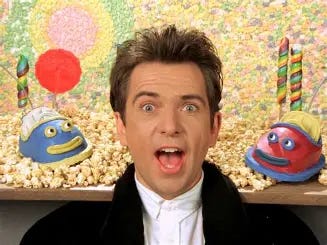
I am a pop fan, so writing this one this week, as the one last week Take On Me has been an absolute joy. Seeing where the worlds of animation and pop music collide is a real treat. I hope that you enjoy this one as much as I have enjoyed researching and writing it.
When Sledgehammer was released in 1986 (that’s 40 years ago this year, yikes), Peter Gabriel was already known for treating music videos as more than promotional afterthoughts. He had spent years experimenting with his visual identity, performance, and symbolism, but Sledgehammer marked a real turning point. This wasn’t just for his career, but for animation’s role in pop music, which became further developed.
The song itself is deceptively simple. Funk-driven, rhythmic, and playful, it disguises its emotional complexity behind innuendo and exuberance throughout the lyrics. What it needed was not illustration, but interpretation. Animation provided exactly that, brilliantly.
Enter Aardman — and a new visual language.
Stephen R. Johnson directed the video, but its defining identity came through collaboration with several animation teams, most notably Aardman Animations, then still best known for their Plasticine work on Morph with the excellent Take Hart.
Rather than choosing a single animation style, Sledgehammer embraces multiplicity. Stop-motion, pixilation, clay animation, replacement animation, and model animation all collide within four minutes. It shouldn’t work together, and yet it does.
Gabriel’s face becomes a canvas. Fruit dances across it. Trains run from his mouth. Chickens march, flowers bloom, and clay figures assemble and disassemble in rhythm with the track. The animation doesn’t sit alongside the music; it locks into it.
The physicality of stop-motion
One of the most striking aspects of Sledgehammer is how stubbornly physical it feels. This is an animation you can almost touch. Clay squashes. Objects wobble. Nothing is smooth, nothing is hidden.
This tactility mattered. In the mid-1980s, video effects were becoming slicker and more digital. Sledgehammer went the other way, foregrounding fingerprints, imperfections, and visible manipulation.
Stop-motion, by its nature, makes time visible. You sense the labour behind every movement. That effort mirrors the song’s insistence as it pushes and pulls, its build and release.
As here, as is always the case for me in pop music videos, animation here is not decorative; it’s rhythmic.

Peter Gabriel as an animated object
Unlike many artists who use animation to escape their physical presence, Gabriel places himself directly inside it. His head remains static for much of the video, while the world animates across and around him.
This choice was quietly radical as he became part of the animation process rather than its star. In some sequences, he barely moves at all, allowing the animated elements to take control.
It’s a reversal of the pop hierarchy in which the performer submits to the animation.
That submission gives the video its odd intimacy. Gabriel is present, but not dominant. Expressive, but oddly vulnerable.
MTV, saturation, and shock
When Sledgehammer entered rotation on MTV, it did so with force. The video was impossible to ignore. Its imagery was unlike anything else on the channel, and its refusal to settle into a single visual mode kept viewers watching.
It didn’t just win awards; it rewired expectations. At the 1987 MTV Video Music Awards, Sledgehammer won a then-unprecedented number of prizes, including Video of the Year.
More importantly, it demonstrated that animation could anchor a mainstream pop hit without feeling niche or experimental. This was animation as spectacle, yes — but also as craft.

The influence that spread quietly
The influence of Sledgehammer didn’t arrive as imitation so much as permission. It gave artists license to trust animation with adult music and complex emotions.
You can feel its aftershocks in everything from late-80s advertising to 1990s alternative music videos. Stop-motion re-entered the visual mainstream. Clay animation stopped being confined to children’s television.
Even when later videos didn’t resemble Sledgehammer stylistically, they borrowed its confidence: the belief that animation didn’t need justification.
Animation and innuendo
It’s worth noting how cleverly Sledgehammer handles its subject matter. The song’s sexual metaphors are apparent, but the animation keeps them buoyant rather than crude.
Bananas dance. Trains emerge. Objects assemble suggestively, but always with humour and warmth. Animation allows exaggeration without embarrassment. It softens the edge while keeping the intent intact brilliantly.
This is one of animation’s great strengths in adult media: it can acknowledge desire without becoming literal.
Financial success and longevity
Commercially, Sledgehammer was a triumph. The song became Peter Gabriel’s biggest hit, particularly in the United States, and played a central role in the album So’s success.
The video itself became an asset rather than an accessory. It remains one of the most replayed, discussed, and studied music videos of all time and is frequently included in retrospectives, exhibitions, and animation histories.
Unlike many visually experimental videos, it has aged remarkably well. Its reliance on physical materials rather than digital effects has helped it resist its dating.
Three things you might not know about Sledgehammer
First, the video took several months to complete, with Gabriel required to lie still for long periods while individual frames were photographed.
Second, Aardman’s involvement in Sledgehammer helped introduce their work to an international audience, laying the groundwork for later success with Wallace and Gromit.
Third, despite its complexity, the video was carefully choreographed to the song’s structure. Every visual change is timed to a musical shift.

Why it still matters
Sledgehammer endures because it trusts the audience. It doesn’t explain itself. It doesn’t apologise for its strangeness. It assumes that viewers are willing to meet animation halfway.
In an era increasingly dominated by frictionless digital imagery, Sledgehammer reminds us of animation’s physical roots of hands, materials, patience, and play.
Paired with Take On Me, it tells a broader story about animation’s place in pop culture. One invites us into a fragile, drawn world; the other insists we stay grounded in texture and rhythm.
Both changed the rules, both prove the same thing: when animation is taken seriously, it doesn’t decorate music, it transforms it.
If you fancy reliving it or watching it for the first time, click Sledgehammer.
A great song and video! I have always loved the animation, which makes more sense knowing that Aardman was behind it.
I'm loving this series! (Although I refuse to believe that 'Sledgehammer' can be 40 years old...). I loved the video at the time and the song. It has such an eighties sound. I hadn't realised that Aardman worked on it, though looking at it now, it seems quite obvious. Long live Morph!! :)