
Joseph Barbera: Drawing Discipline in a Digital Age
What Joseph Barbera’s routines can teach modern creatives

Welcome to Animated, where I usually investigate the stories behind the cartoons you grew up with, and the ones you might have missed. In this series, I explore the daily, weekly, and monthly work ethics of prominent people in animation, examining how we can apply these principles in our increasingly digitally distracted world.
This week, a bit of a hero of mine with Joseph Barbera. I hope you enjoy this and the series. I am always happy to hear from you.
He Started His Day with a Sketchbook, Not a Screen
Joseph Barbera’s mornings began with pencil and paper. No emails. No notifications. Just lines, shapes, and ideas. He believed in warming up the mind through drawing, like stretching before a marathon. In today’s world, where our first instinct is to check a screen, Barbera’s analogue start feels almost radical and is something I try to do.
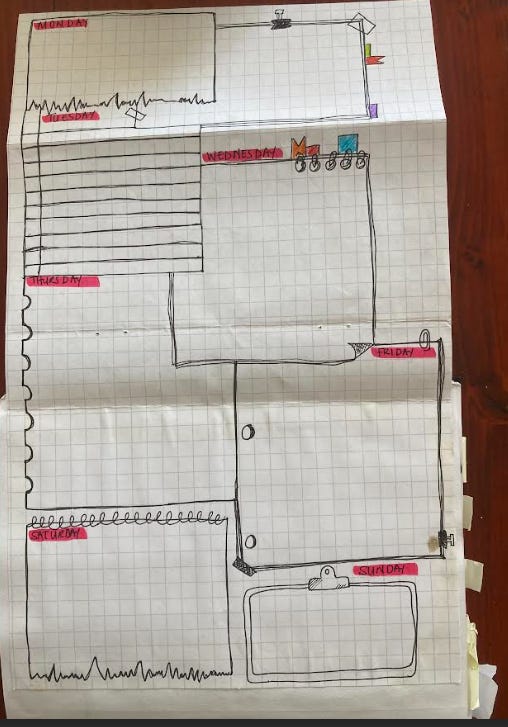
This is one of mine that I did. I like to try creative, but organised, so here is my morning combo for the week ahead.
Barbera’s sketchbooks weren’t just tools; they were companions. He used them to explore character expressions, comedic timing, and visual rhythm. For creatives today, this is a reminder: before diving into digital tools, take a moment to connect with the tactile. There’s something grounding about starting with your hands.
He Treated Creativity Like a Job, Not a Mood
Barbera didn’t wait for inspiration to strike. He clocked in. He showed up. This is certainly something I try to adhere to, not always easy, but I believe that creativity is a craft, one that requires consistency, not just bursts of brilliance. He and William Hanna produced hundreds of episodes under tight deadlines, often juggling multiple shows at once.
In our age of flexible schedules and remote work, Barbera’s ethic is a beacon. He worked with discipline, not distraction. He didn’t chase perfection; he chased progress. For anyone struggling to stay focused amid digital noise, his approach offers a simple truth: creativity thrives on routine.
Embrace Constraints as Catalysts
When Hanna-Barbera transitioned to television, they faced a major challenge: limited budgets. Instead of resisting, Barbera innovated. He helped pioneer ‘limited animation,’ using fewer frames and more static backgrounds, relying on strong writing and character design to carry the story.
This wasn’t a compromise; it was a creative breakthrough. In today’s world of endless apps, plugins, and AI tools, Barbera’s mindset is refreshing. Sometimes, having fewer options forces better decisions. Constraints aren’t barriers, they’re blueprints for innovation.
Know when to step back
Barbera wasn’t precious about his ideas. It’s very challenging to do, but to understand that not every pitch would land, not every character would be brilliant, he was known for shelving concepts that didn’t work and revisiting them later with fresh eyes. This is all about believing in the long game.
In a culture of instant feedback and viral metrics, this kind of patience is rare. Barbera’s ability to pause, reflect, and revise is a lesson in creative humility. Not everything needs to be posted. Not every idea needs to be shared immediately. Sometimes, the best work comes from waiting.

Repetition, Not Reinvention
Barbera didn’t reinvent the wheel with every project. He refined it. Returning to familiar character types, comedic setups, and visual motifs, knowing what worked and what made it better.
In today’s fast-paced digital landscape, where trends shift overnight, Barbera’s approach is a reminder that mastery comes from repetition. You don’t need to chase the new to stay relevant; you just need to deepen the familiar.
Joseph Barbera (1911–2006) wasn’t just an animator; he was a craftsman of character, a steward of story, and a quiet rebel against distraction. His routines, habits, and mindset offer timeless lessons for anyone trying to create meaning in a world of noise.
So what can we take from all this, I hear you ask-
Start analogue – Warm up with pen and paper before diving into screens or digital tools.
Show up daily – Treat creativity as a craft that thrives on consistency, not just bursts of inspiration.
Use constraints – Limitations can push you toward more innovative and focused solutions.
Pause and reflect – Step back from ideas that aren’t working and revisit them with fresh eyes.
Refine, don’t reinvent – Mastery comes from improving proven ideas rather than constantly chasing new trends.
Loved this! Especially the one about consistency; creativity never thrives without showing up and making a start.
Starting your day with a sketchbook sounds ideal! I’m trying to reduce my screentime, it’s so important for creativity. Thanks for sharing :)